Indian weddings are among the most joyful, color-filled, and spiritually meaningful celebrations in the world. They bring together family across generations, weave together ritual and festivity across multiple days, and create memories that last a lifetime for everyone present.
For Bay Area couples planning a Hindu or Indian wedding, finding a venue that not only has the beauty and space for these celebrations, but genuinely welcomes the traditions that make them sacred, is one of the most important decisions you will make. The Living Well Event Center in Los Gatos is honored to host Indian weddings, and is one of the few venues in the South Bay that explicitly accommodates the sacred Havan fire ceremony for the Pheras.
This guide walks through the key components of a traditional Hindu wedding, what to look for in a venue, and how Living Well supports your celebration from start to finish.
The Components of a Traditional Hindu Wedding
A traditional Hindu wedding is not a single event but a series of ceremonies spread across multiple days, each with its own meaning, ritual, and joyful tradition. While practices vary by region, family, and community, the following ceremonies are common across many Hindu weddings celebrated in the Bay Area.
Mehendi
Typically held one to two days before the wedding, the Mehendi ceremony is an evening of music, dancing, and celebration as the bride's hands and feet are adorned with intricate henna designs. Tradition holds that the deeper the color, the stronger the love in the marriage. This is usually a women-centered event, filled with singing, laughter, and food.
Sangeet
The Sangeet is a pre-wedding musical celebration where both families come together for an evening of song, dance, and performances. It's one of the most joyful events in the wedding weekend, often featuring choreographed dance numbers by family members, live music, and a festive dinner. The Sangeet brings both sides of the family together before the formal ceremony and sets a tone of celebration and welcome.
Haldi
The Haldi ceremony takes place the morning of or day before the wedding, when family members apply a paste of turmeric, sandalwood, and rose water to the bride and groom. Turmeric is considered auspicious and is believed to bless and purify the couple before their union. It's an intimate, often playful ceremony that carries deep meaning about family love and blessings.
Baraat
The Baraat is the groom's arrival procession. Traditionally the groom arrives on horseback, accompanied by family and friends dancing to dhol drums and music. The procession ends when the bride's family welcomes the groom in a ritual called the Milni, one of the most warmly anticipated moments of the entire wedding weekend.
Ganesh Puja
Before the main wedding ceremony begins, a prayer is offered to Lord Ganesha, the remover of obstacles, to bless the union and ensure a smooth and auspicious start to the couple's married life. This brief but important ritual sets the sacred tone for all that follows.
Var Mala (Jaimala)
The Var Mala, or exchange of garlands, is the formal greeting between bride and groom at the start of the ceremony. The couple places flower garlands around each other's necks as an expression of acceptance and mutual respect, often accompanied by the groom's family playfully lifting him to keep the bride from reaching, and the laughter that follows.
The Pheras: Seven Sacred Circles Around the Fire
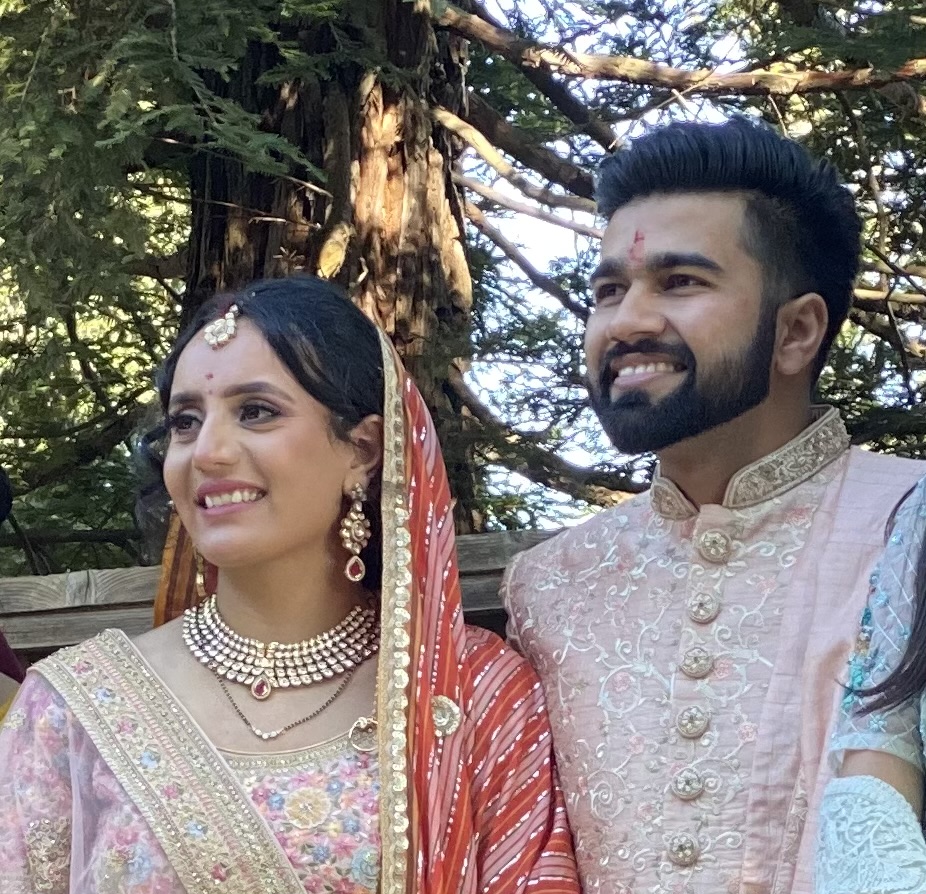
The Pheras are the heart of the Hindu wedding ceremony. The bride and groom take seven circles around the sacred fire, known as the Agni, with each circle representing a vow: for nourishment, for strength, for prosperity, for wisdom, for family, for health, and for lifelong friendship and love. These seven vows, spoken in Sanskrit and witnessed by family and the divine, are what make the marriage sacred in the Hindu tradition. The fire is not decoration. It is the divine witness to the marriage itself.
Sindoor and Mangalsutra
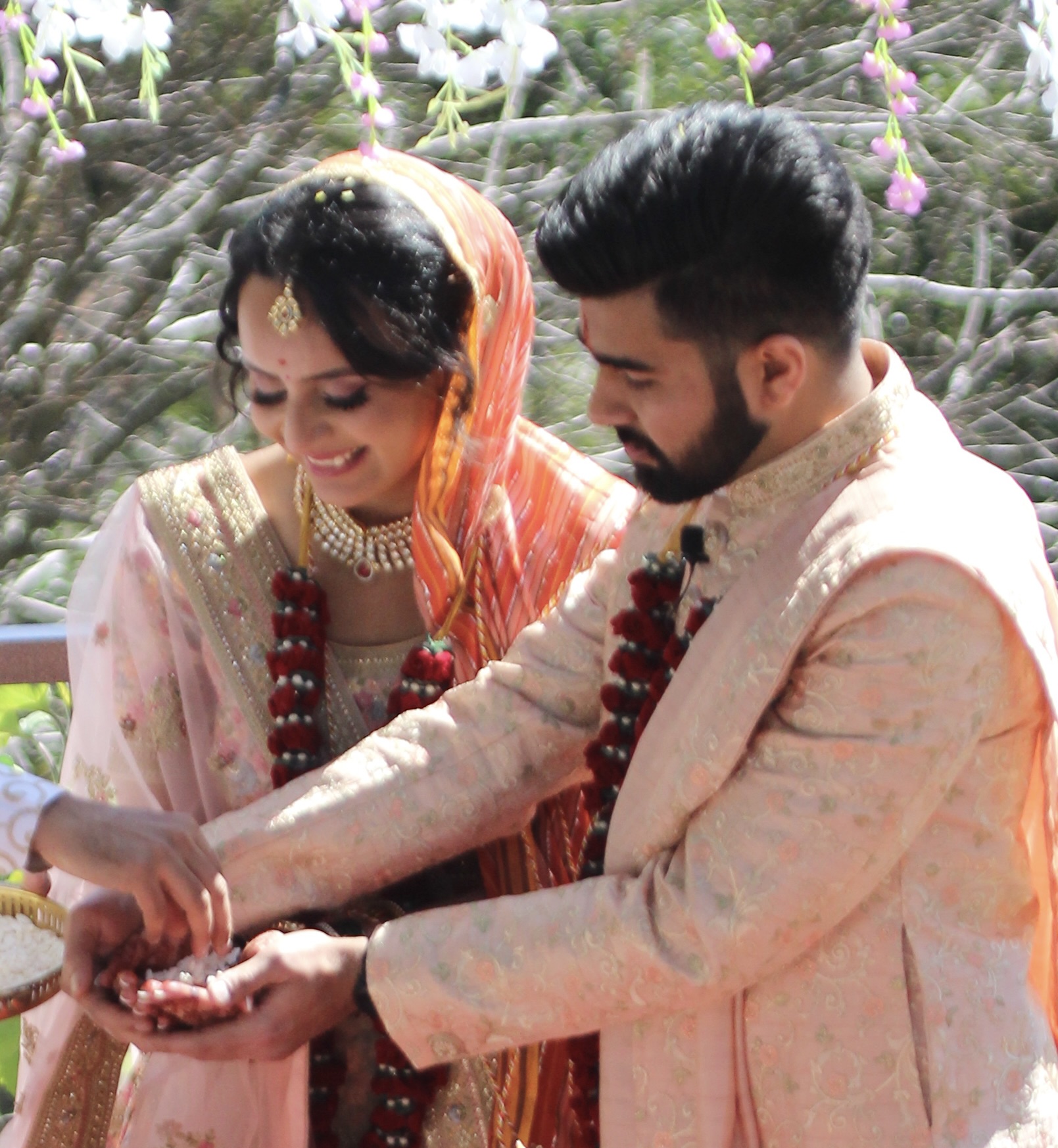
Following the Pheras, the groom applies sindoor (vermillion powder) to the part of the bride's hair and ties the mangalsutra, a sacred necklace, around her neck. These are among the most emotionally significant moments of the ceremony, marking the bride's transition into married life. Guests often fall silent as these rituals take place.
Vidaai
The Vidaai is the bride's farewell from her family, one of the most tender moments of the wedding. As she prepares to leave with her new husband, she throws rice or flower petals backward over her shoulder toward her family as a gesture of gratitude and blessing. It is a moment of both joy and deep feeling, and one that rarely leaves a dry eye in the gathering.
The Sacred Fire: Havan at Living Well
We Welcome the Havan Ceremony
Finding a Bay Area venue that permits the sacred fire ceremony is one of the most common challenges Indian couples face when planning their wedding. Many venues prohibit open flame entirely, which makes an authentic Hindu wedding ceremony impossible.
Living Well Event Center explicitly welcomes the contained sacred ceremonial fire (Havan) for the Pheras. We understand that the Agni is not optional. It is the spiritual center of the Hindu wedding ceremony, and we honor that.
Our outdoor ceremony space provides the natural setting, open air, and safety considerations that make the Havan ceremony both possible and beautiful. We work with your pandit in advance to ensure the setup is appropriate, dignified, and in keeping with your family's traditions.
Why Living Well Works for Indian Weddings
Space for Multi-Day Events
Indian weddings often span multiple events across a weekend. Living Well is available for individual event bookings, making it possible to host your Sangeet on Friday evening, your wedding ceremony on Saturday, and a post-wedding brunch on Sunday, each with the full beauty of the property as your backdrop.
Outdoor Ceremony Space for the Mandap
The mandap, the sacred canopy under which the wedding ceremony takes place, is traditionally positioned outdoors or in an open space. Our 2,000 square foot redwood deck and surrounding grounds provide ample space for mandap setup, seating for guests, and the ceremonial movement of the Pheras. The natural mountain setting and open sky add a dimension of reverence that enclosed ballrooms simply cannot offer.
Capacity for Extended Family
Indian weddings bring families together in the fullest sense. Living Well accommodates up to 100 guests, which works beautifully for intimate to mid-sized celebrations. We are happy to discuss your specific guest count and configuration during a site visit.
Flexible Catering
Indian wedding menus are an essential part of the celebration, and they require a caterer who truly understands the cuisine. At Living Well, you are welcome to bring any caterer of your choice. Our catering kitchen is available for your team to use, with no restrictions on the food or menu style you bring.
Music and Sound
Dhol drummers, live musicians, and Bollywood reception playlists are all welcome at Living Well. Santa Cruz County requires sound levels to remain under 70 decibels, and we provide on-site decibel meters so your DJ or sound team can monitor levels easily.
Living Well for Indian Weddings
- Sacred Havan (contained ceremonial fire) permitted for the Pheras
- Outdoor ceremony space ideal for mandap setup
- Private 4-acre estate with redwood deck, waterfall, orchard, and fire pit
- Panoramic Monterey Bay views
- Capacity up to 100 guests
- Bring your own caterer, full catering kitchen available
- Available for multi-day bookings across the wedding weekend
- Event liability insurance included
- Pet-friendly with ample on-site parking
- 20 minutes from downtown San Jose via Highway 17
Practical Notes for Indian Wedding Planning
Your Pandit
If you don't already have a pandit, the Bay Area has a strong community of Hindu priests who serve the South Bay and Silicon Valley. We are happy to share names of pandits who have worked with couples at Living Well, and we encourage an introductory call or site visit with your pandit so we can coordinate the ceremony setup together.
Muhurta Timing
Hindu weddings are traditionally scheduled according to an auspicious time, or muhurta, determined by a Vedic astrologer or pandit. This may mean your ceremony begins at an unusual hour. We work with whatever time your muhurta calls for. The property is available from 11am to 11pm on your event day, and we can discuss specific timing needs when you inquire.
Decorations and Florals
Indian weddings are known for their extraordinary floral arrangements, fabric draping, and vibrant color. Our outdoor spaces are a welcoming canvas for your decorators. We ask that all decorations be freestanding or safely anchored, and that no permanent alterations be made to the trees or structures on the property. Your decorator is welcome to do a walk-through with us in advance.